
Ephemeral Waters
The beauty and vulnerability of water in the American West
Photographs by Stefan Frutiger · 2026
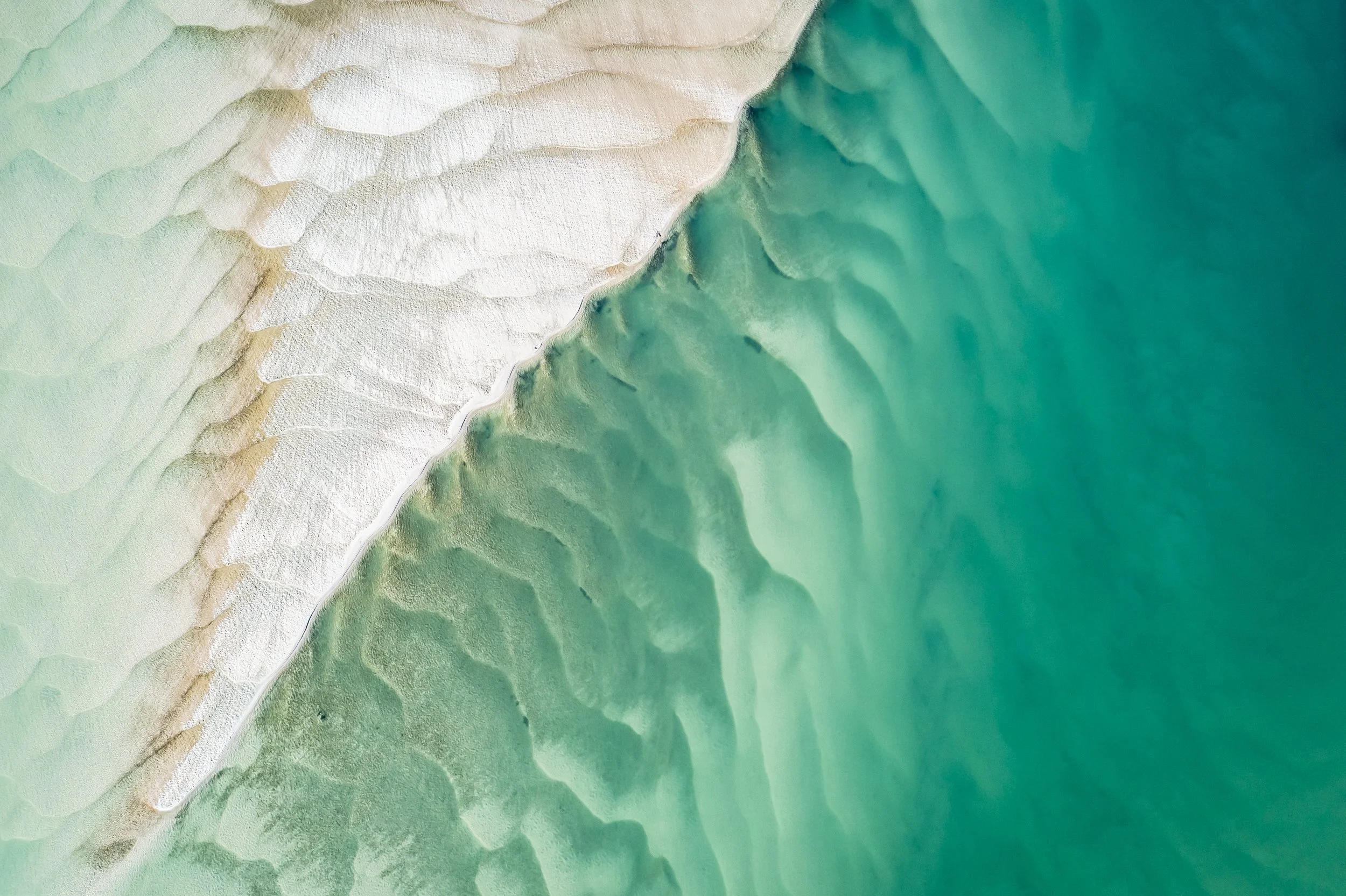
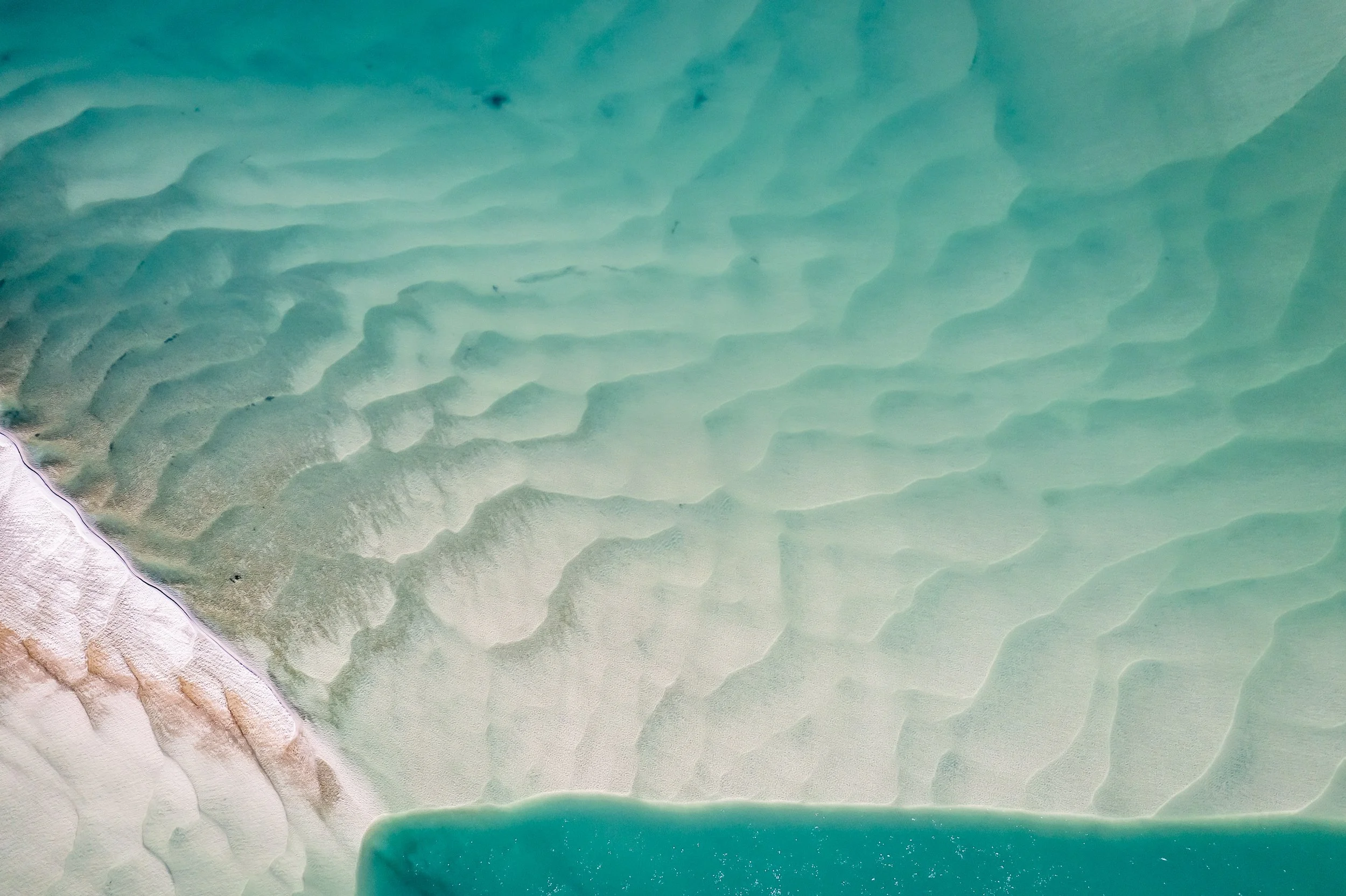
Ephemeral Waters #1. Colorado River near Yuma, Arizona, 2026
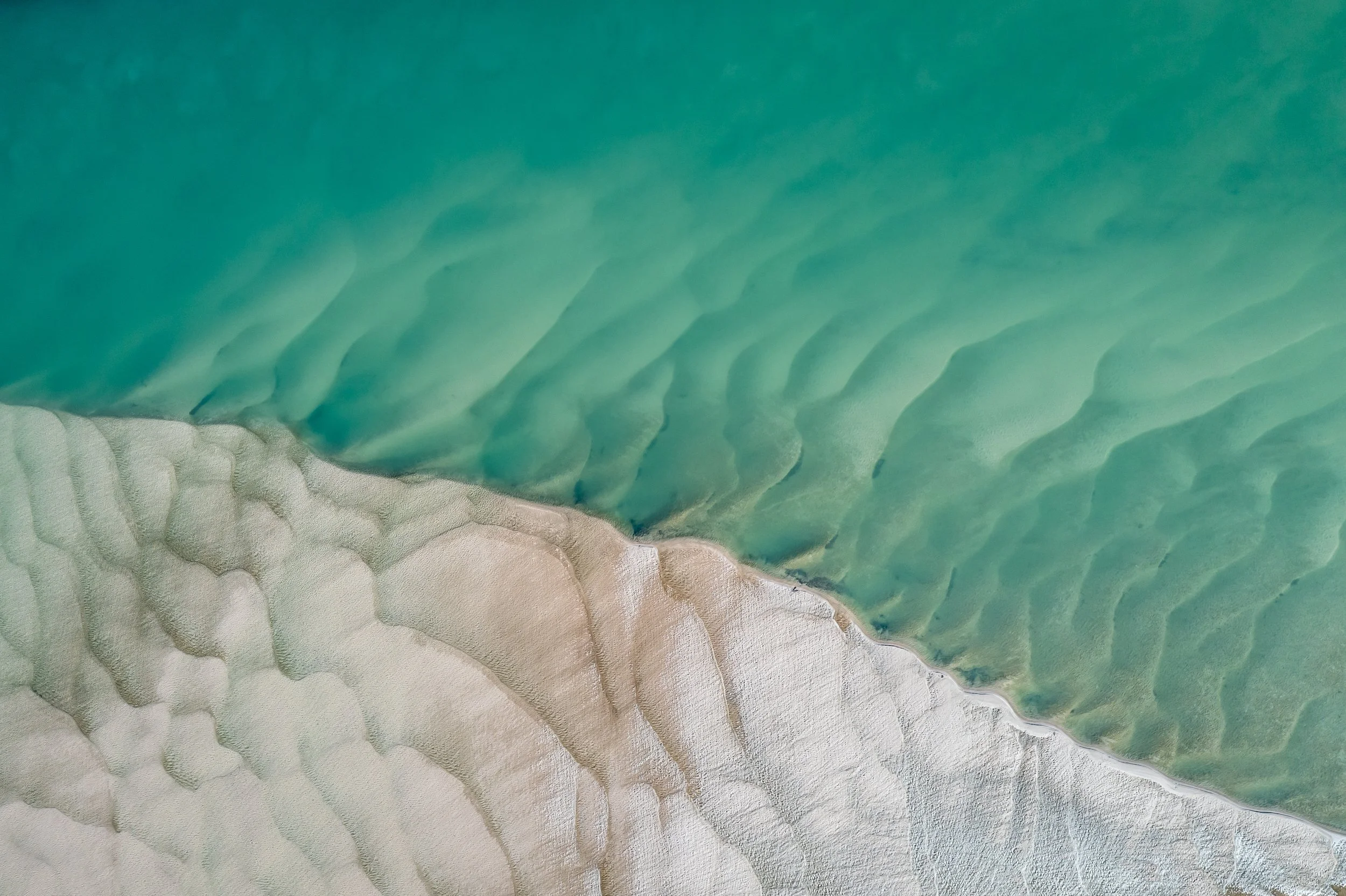
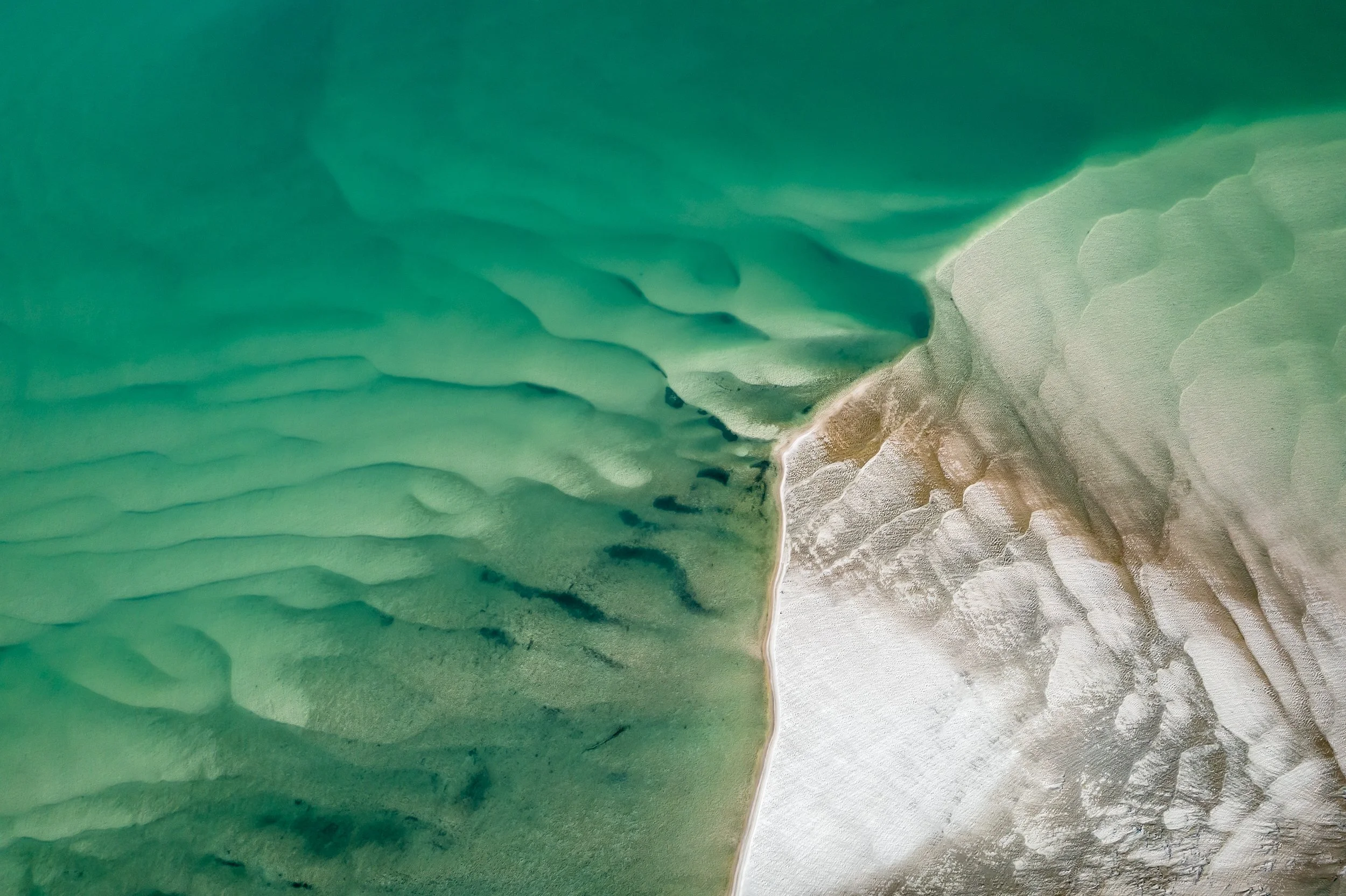
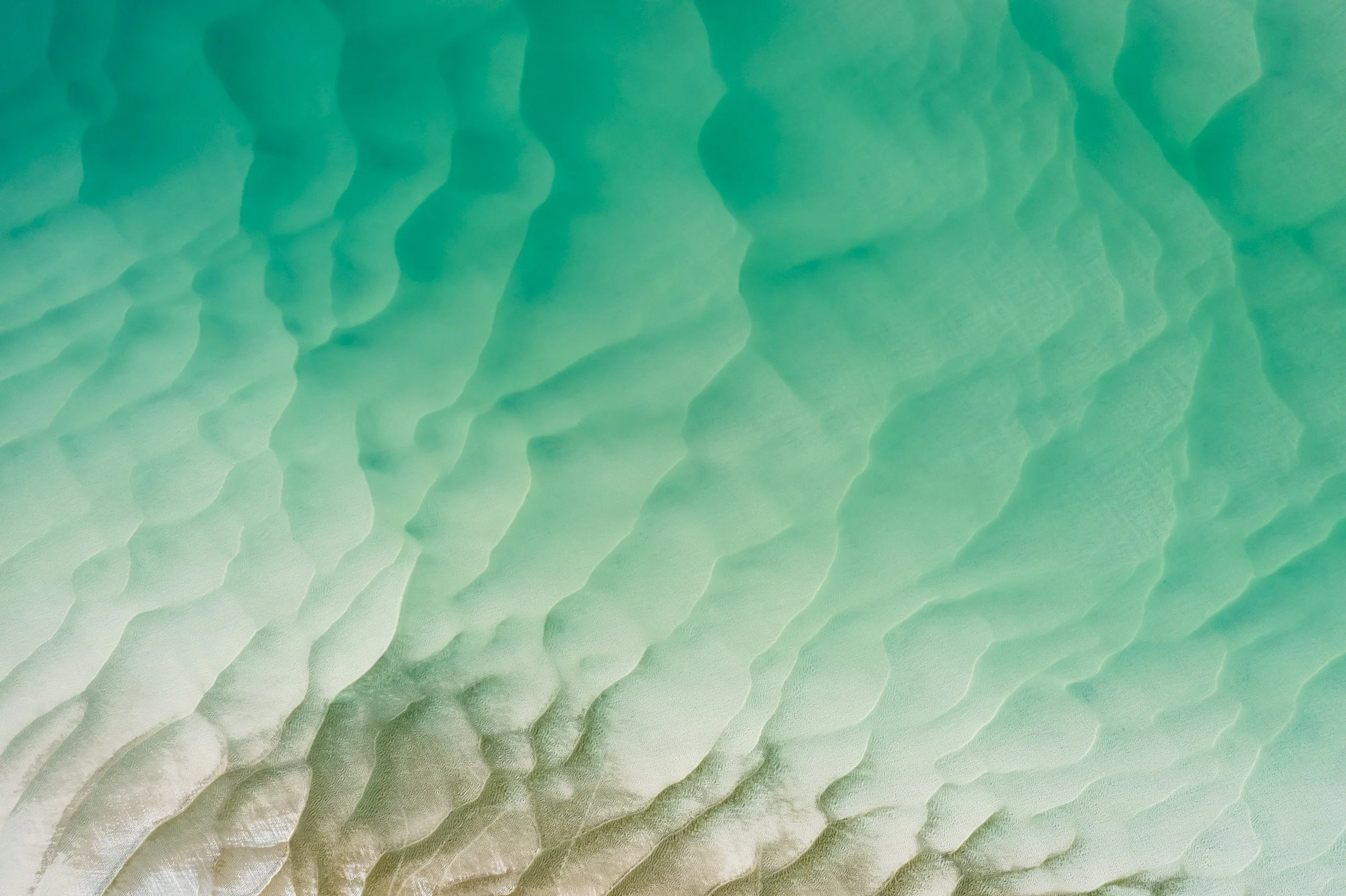
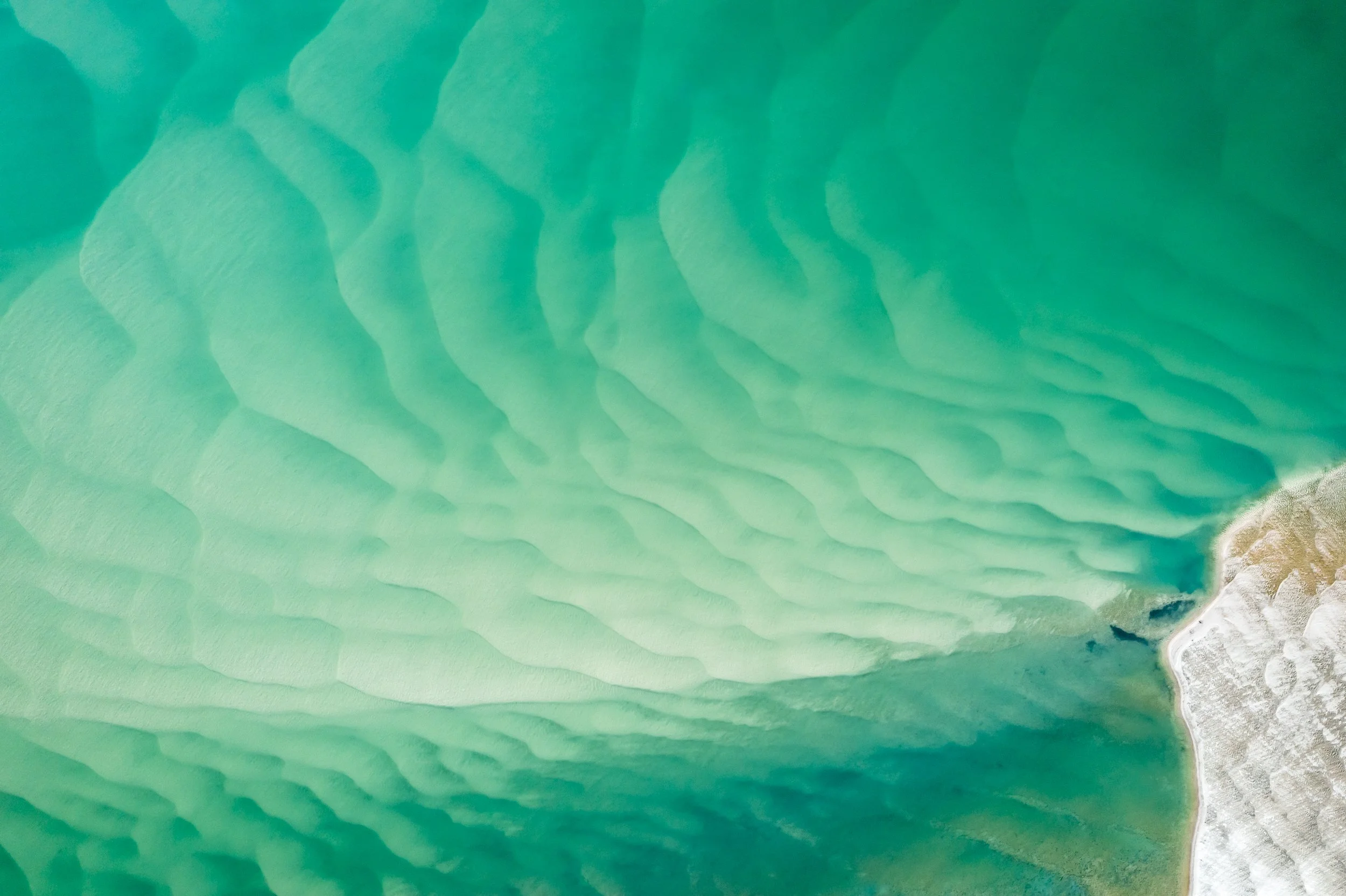
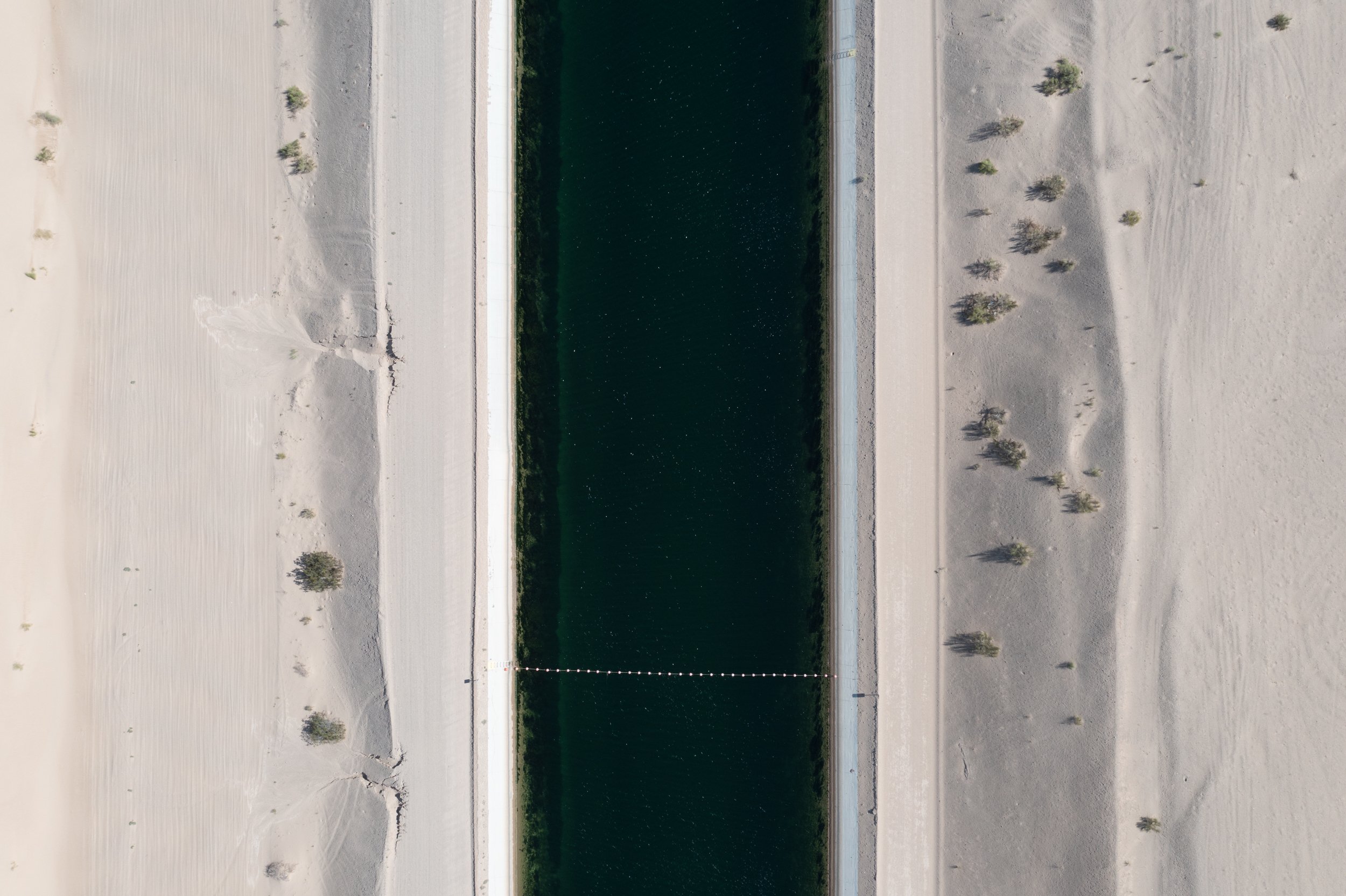
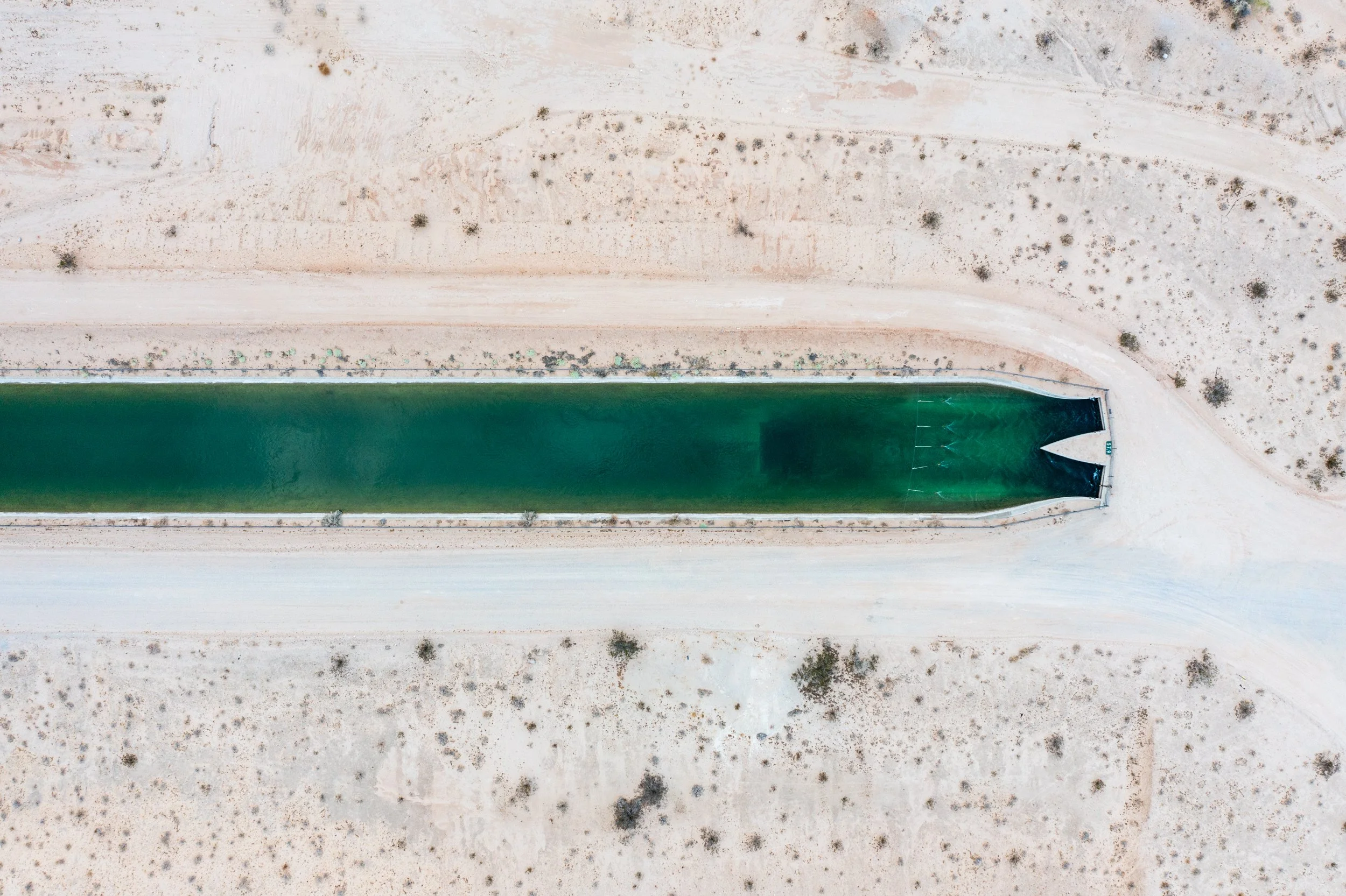
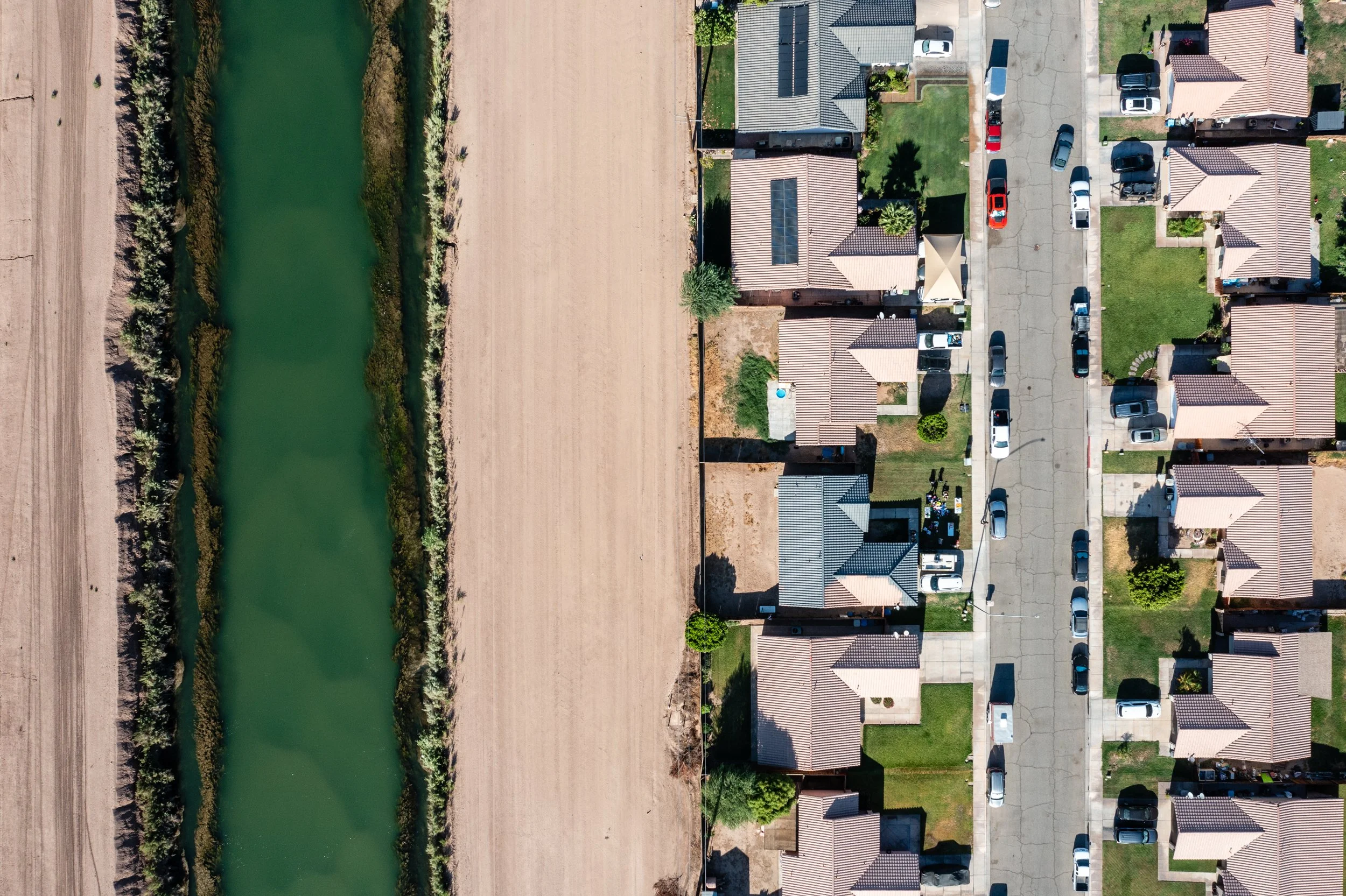
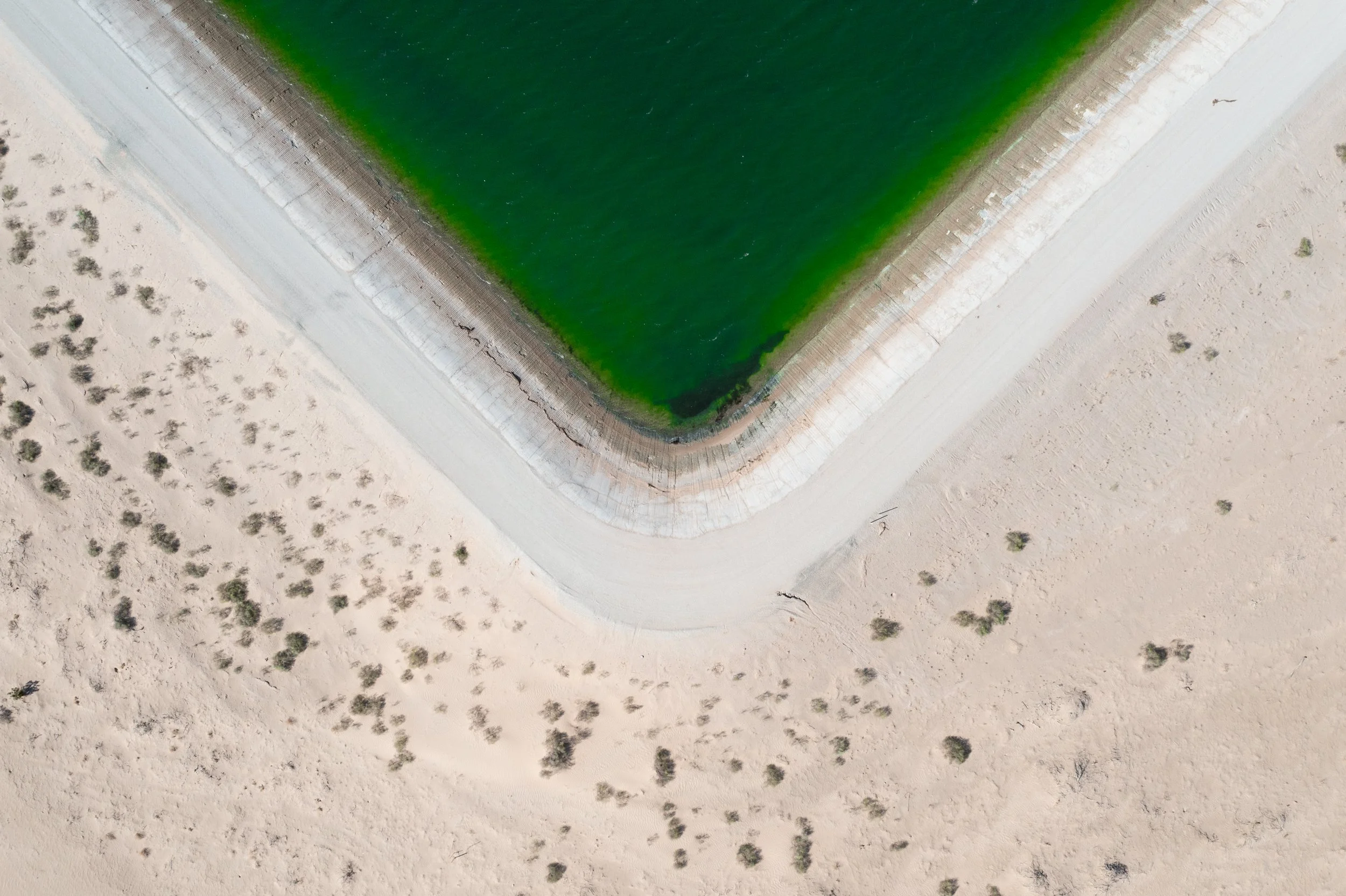
Ephemeral Waters (2026) is a series of aerial photographs by Stefan Frutiger that follows the Colorado River from its clear, turquoise channels near Yuma, Arizona into the open canals that carry it across the desert to farms, golf courses and new subdivisions. Shot straight down from a drone, without a horizon, the images read like abstract paintings. Their beauty is deliberate: a way to draw viewers closer to a water supply that is as fragile and exposed as it is essential.
I. The River
Near Yuma, Arizona the Colorado River runs clear over shifting sand.
Seen from above, without a horizon, it is hard to tell surface from depth.
II. Artist Statement
I grew up in the Swiss Alps, where water was never a question. It fell as snow, ran off the glaciers and filled the lakes. In the deserts of the American Southwest, where I live now, water is always a question. Where does it come from? Who gets it? How long will it last?
Ephemeral Waters began with those questions. I followed the Colorado River south toward the Mexican border and flew my drone straight down over the water. Without a horizon, the river became something I did not expect: turquoise and green currents over pale, submerged sand, closer to painting than to evidence. People who see these images often can't tell whether they are above the water or below it. Floating, sinking, drowning. I have learned to trust that uncertainty.
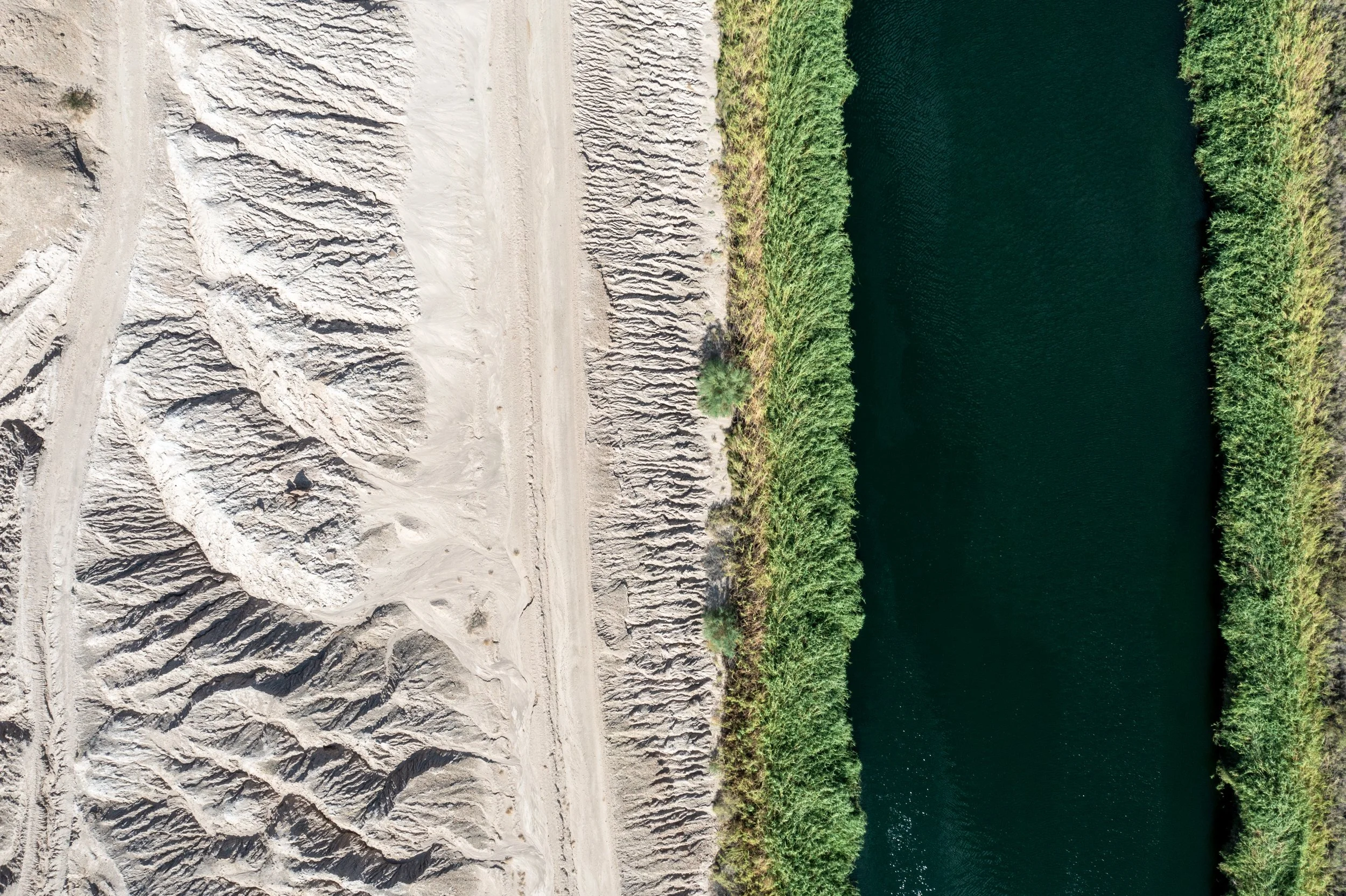
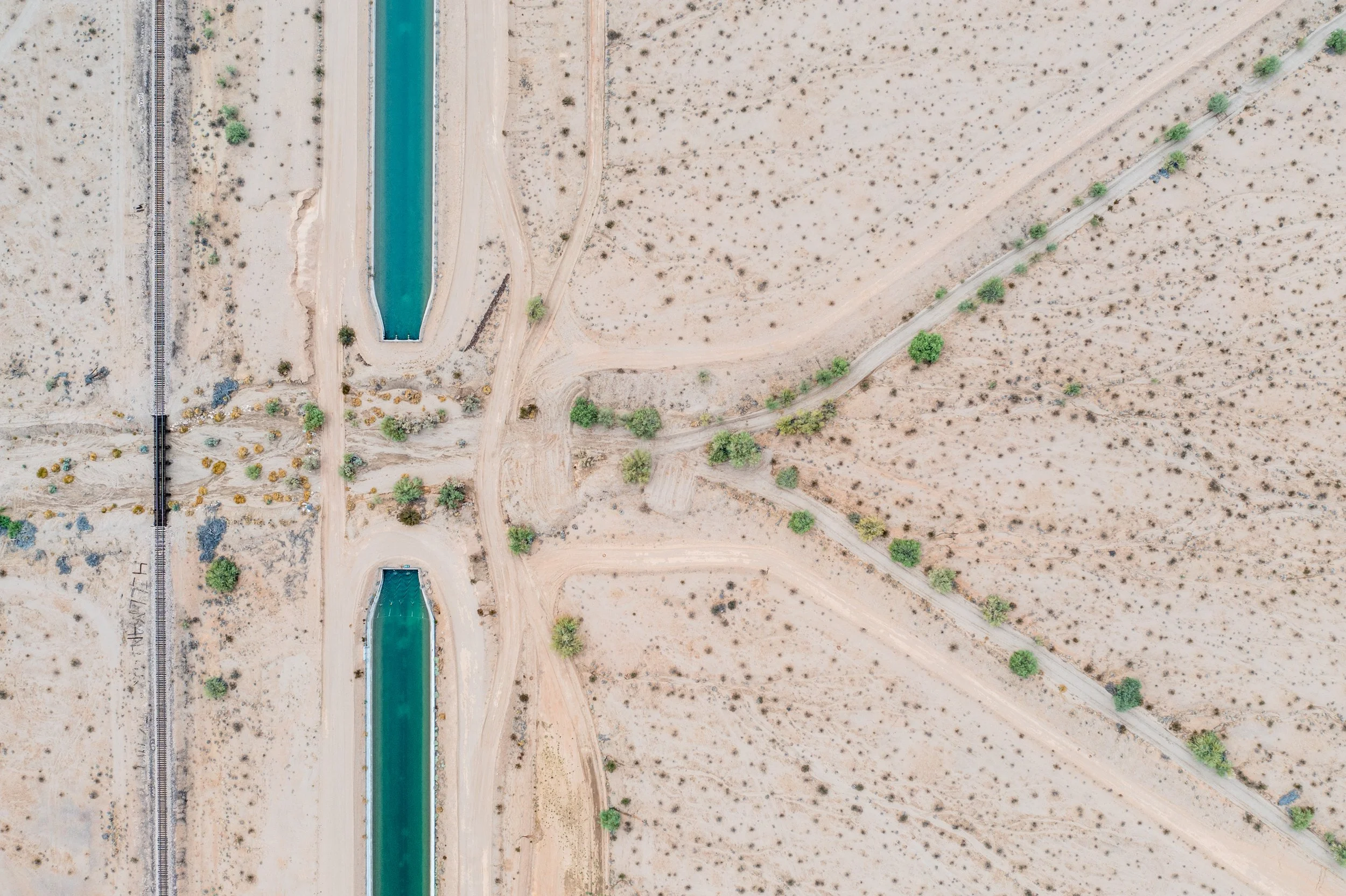
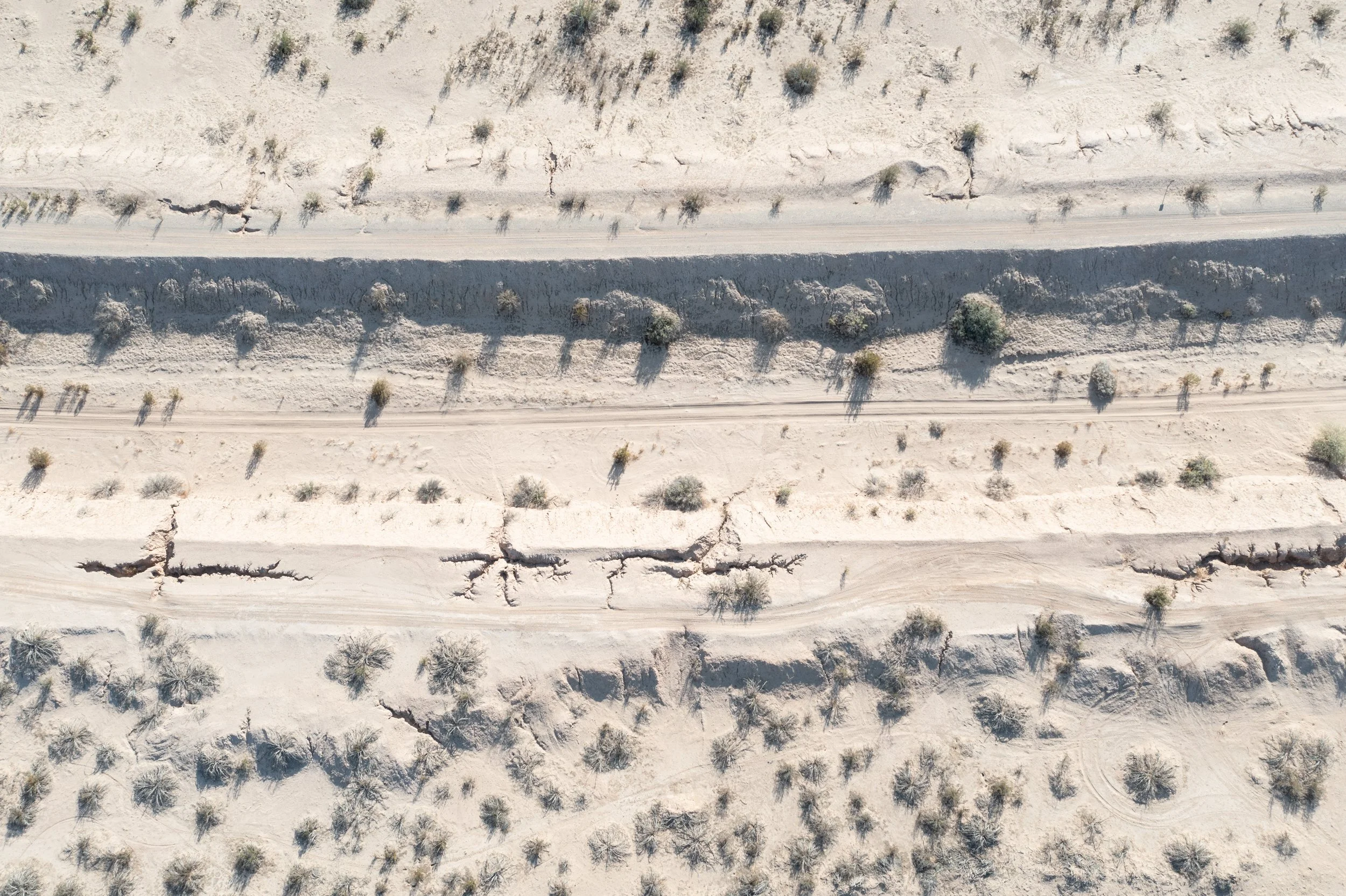
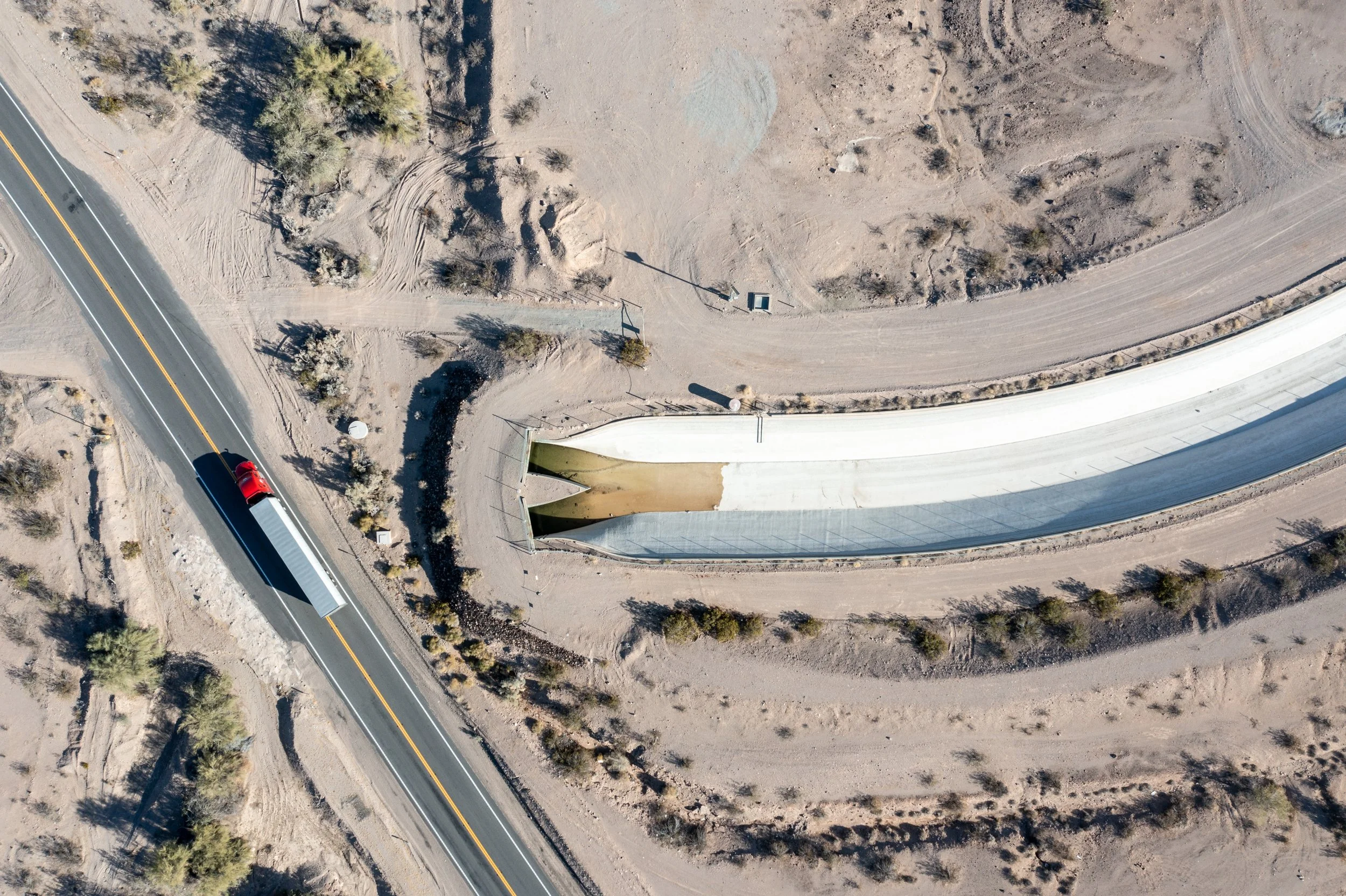
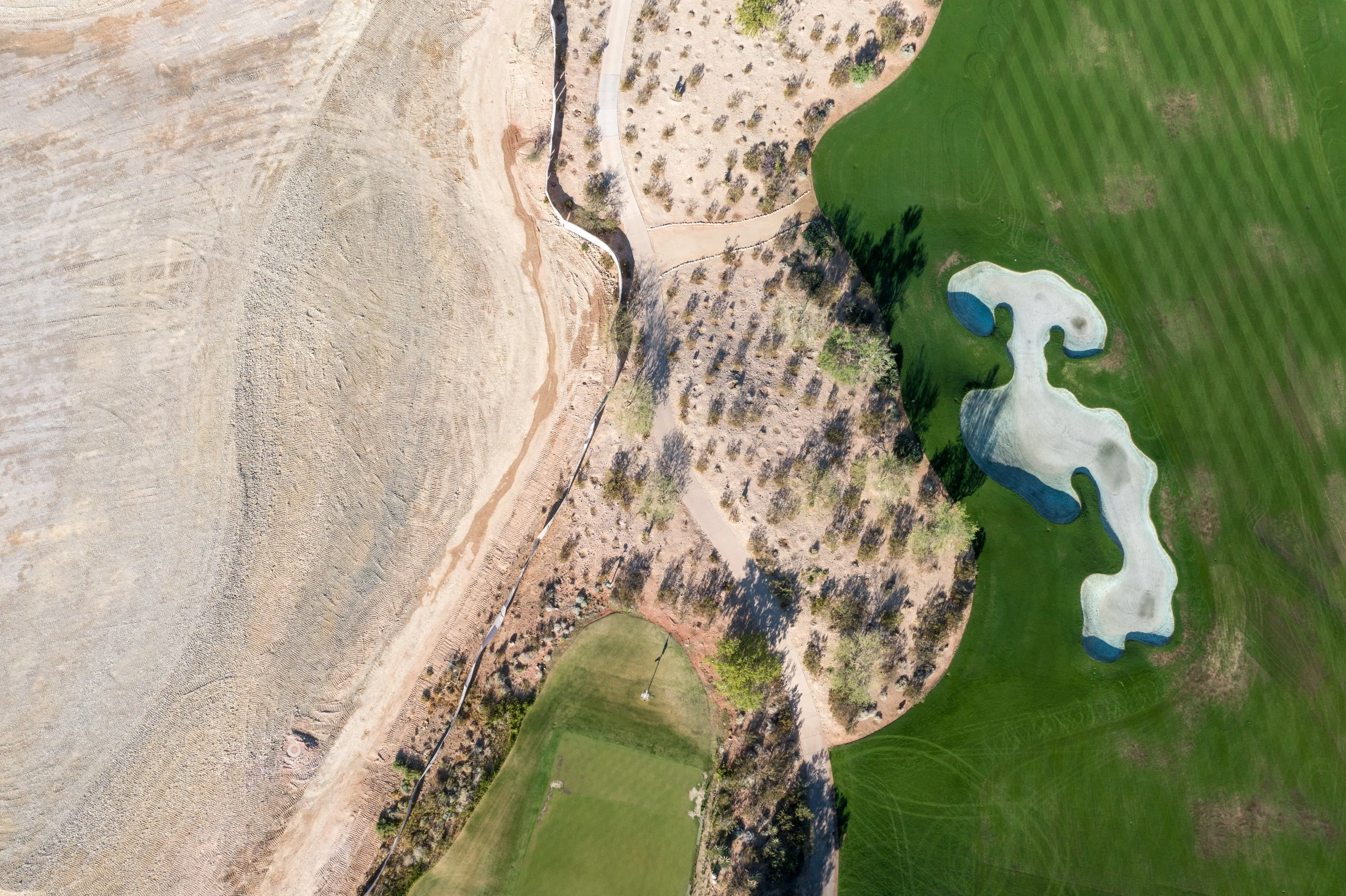
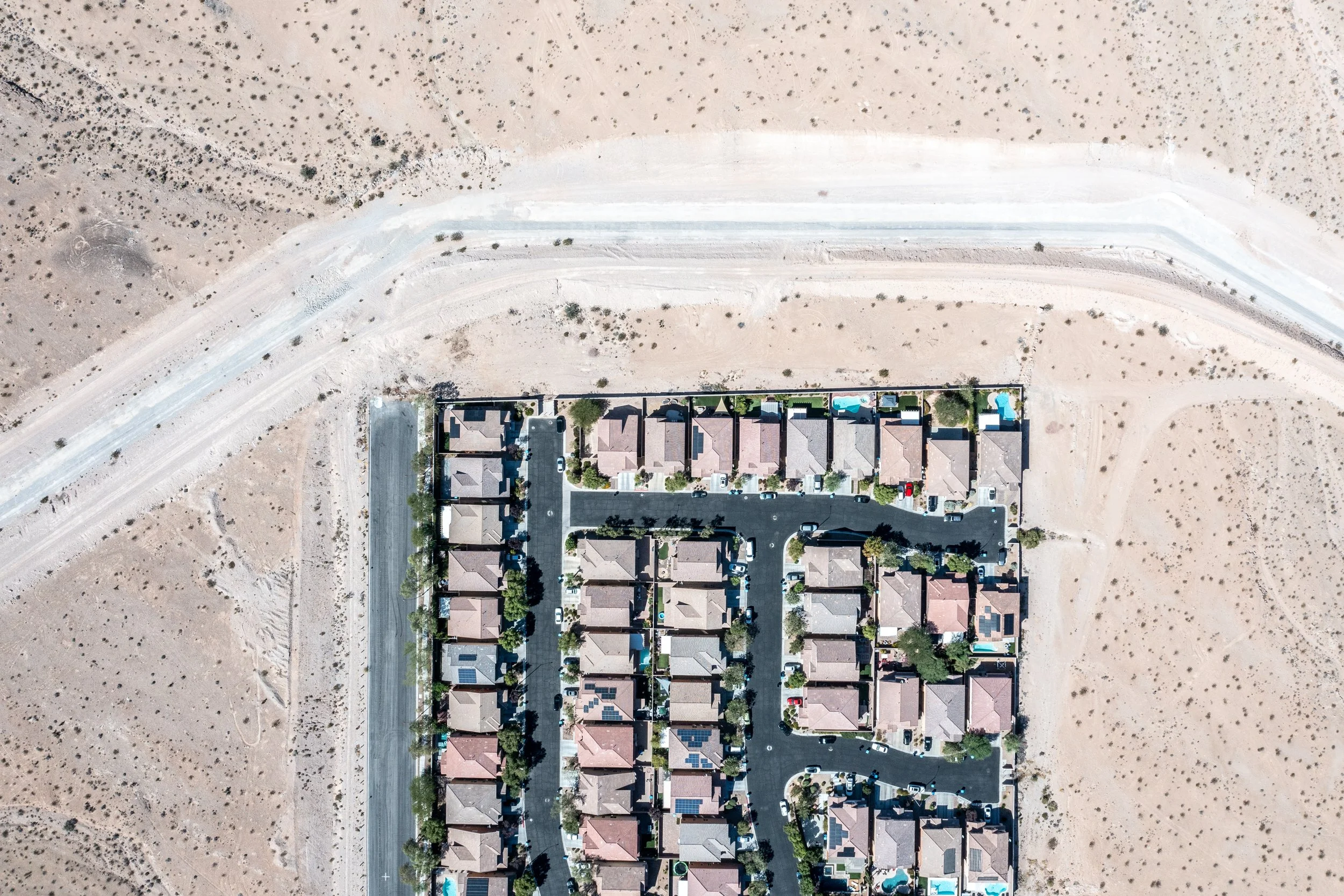
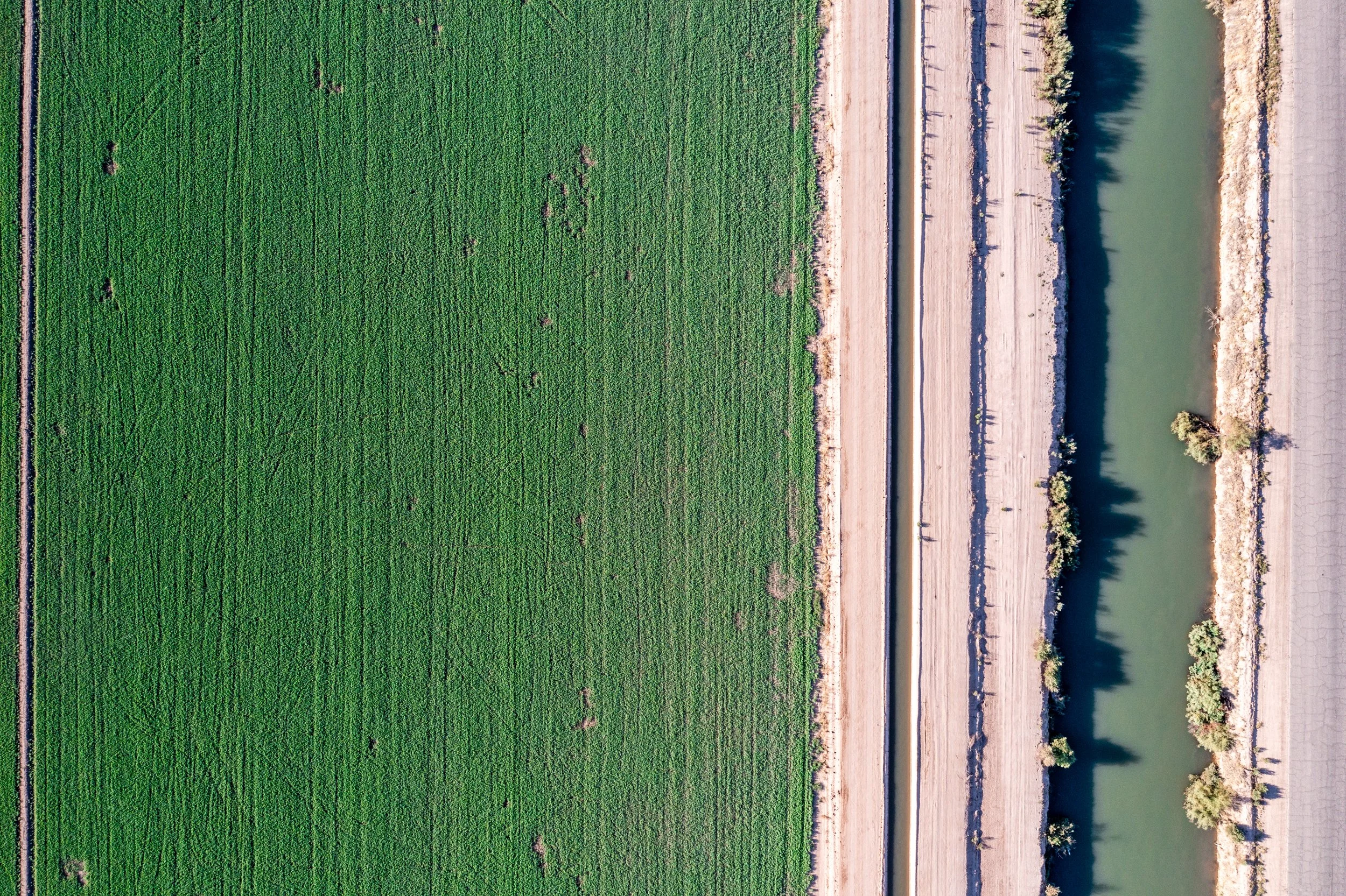
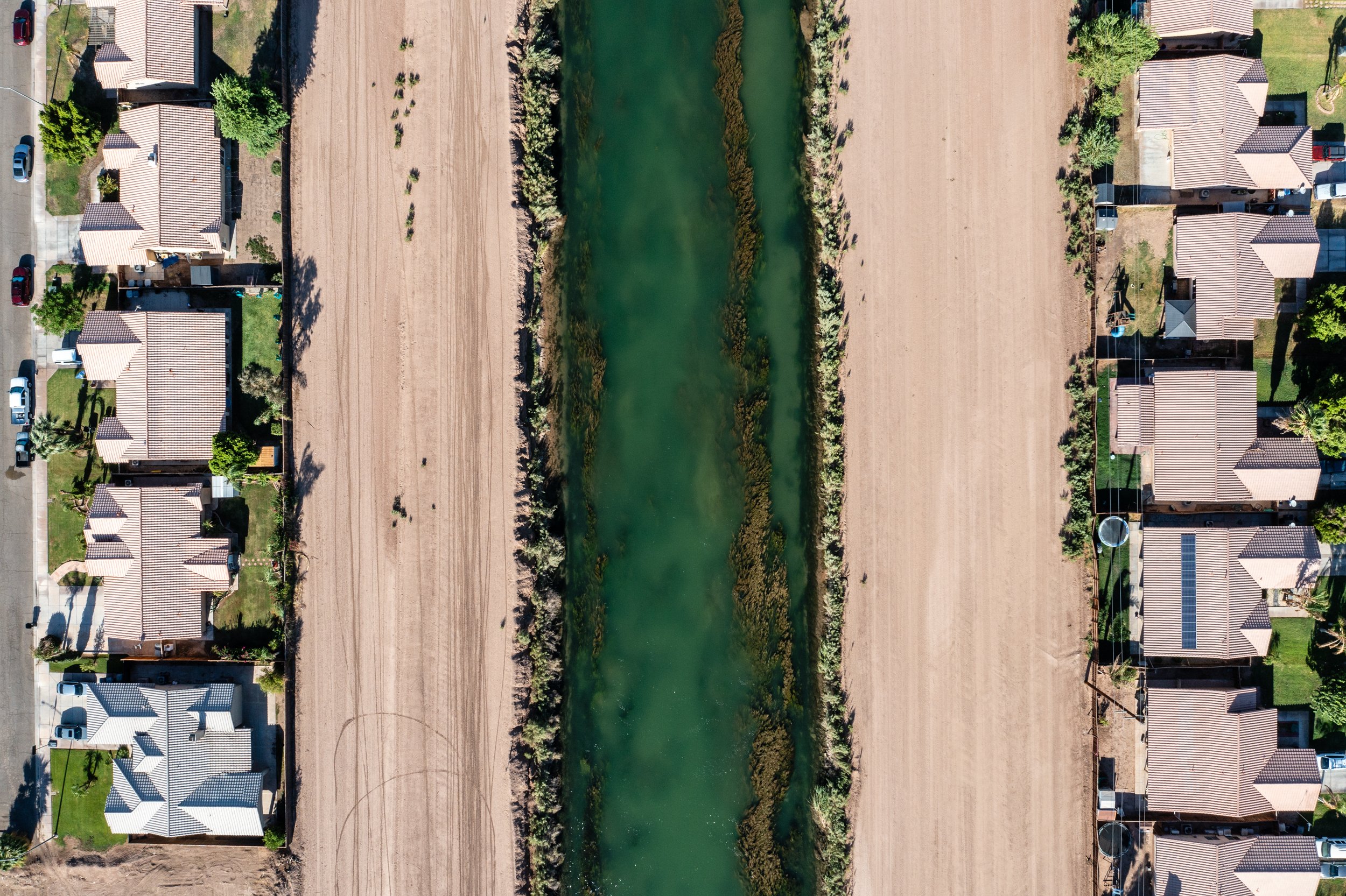
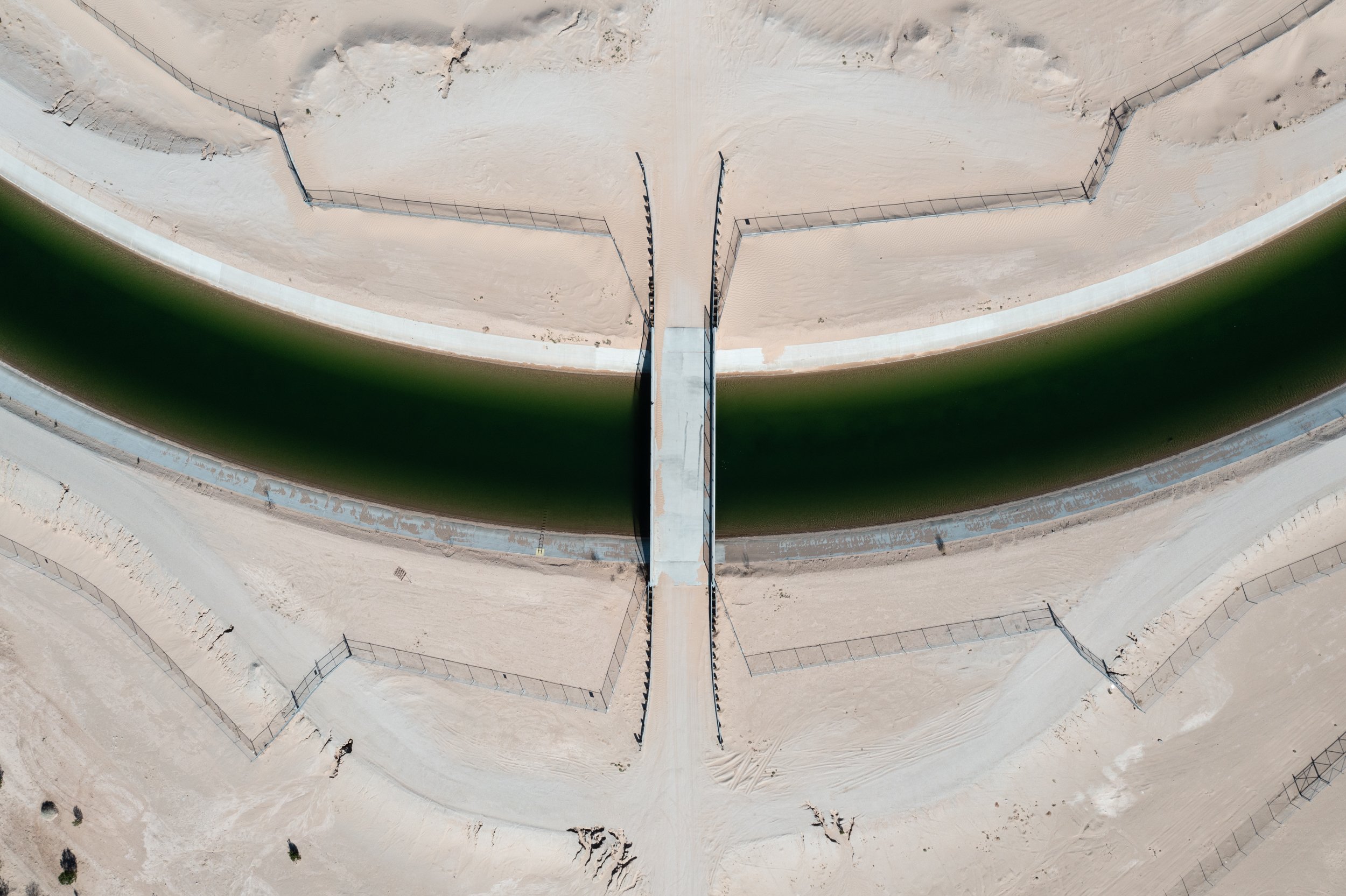
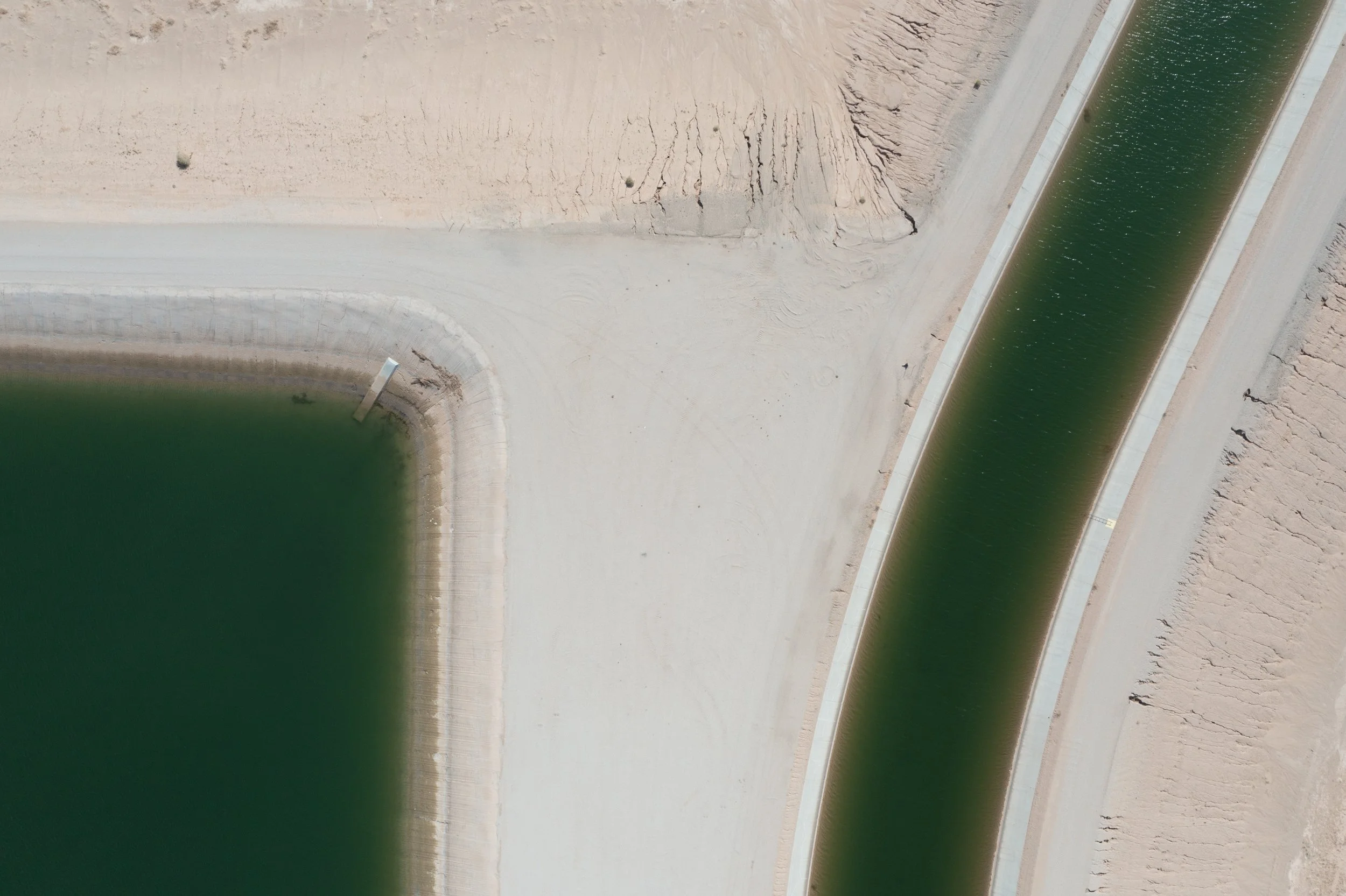
Then I followed the water further. Below the dams, the river is diverted into the All-American Canal, the Coachella Canal and the Colorado River Aqueduct, and carried for hundreds of miles across open desert. Freight trains and trucks cross over it. Lines of floats stretch from bank to bank where people trying to cross have drowned. Old earthen channels lie dry beside their new concrete replacements. At the end of the line, the water becomes green fields, golf courses and new streets pressed against the bare desert.
These photographs are beautiful, and that is deliberate. Beauty is the way in. But don't trust the picture. The openness that makes these waterways glow from the air also leaves them exposed to drought and heat, to contamination, to a single failure somewhere upstream. Some forty million people depend on this river, and most of us never see where our water comes from.
My earlier work faced the crisis head-on: uranium contamination on the Navajo Nation, the shrinking reservoirs of Lake Powell, communities holding rights to water they cannot use. Ephemeral Waters takes another path. It does not lead away from the crisis. It reaches the same place from a different direction. If these images make you stop, look closer and ask what you are seeing, the conversation about water has already begun.
III. The Channels
Below the dams, the river is turned into canals, some still earth, some freshly lined in concrete, and carried across the desert to the people and fields that depend on it.
« Beauty is the way in. Vulnerability is what I hope you leave with. »
IV. The Crossings
Trains, trucks and people cross the water. Here a canal can be a lifeline and a border at the same time.
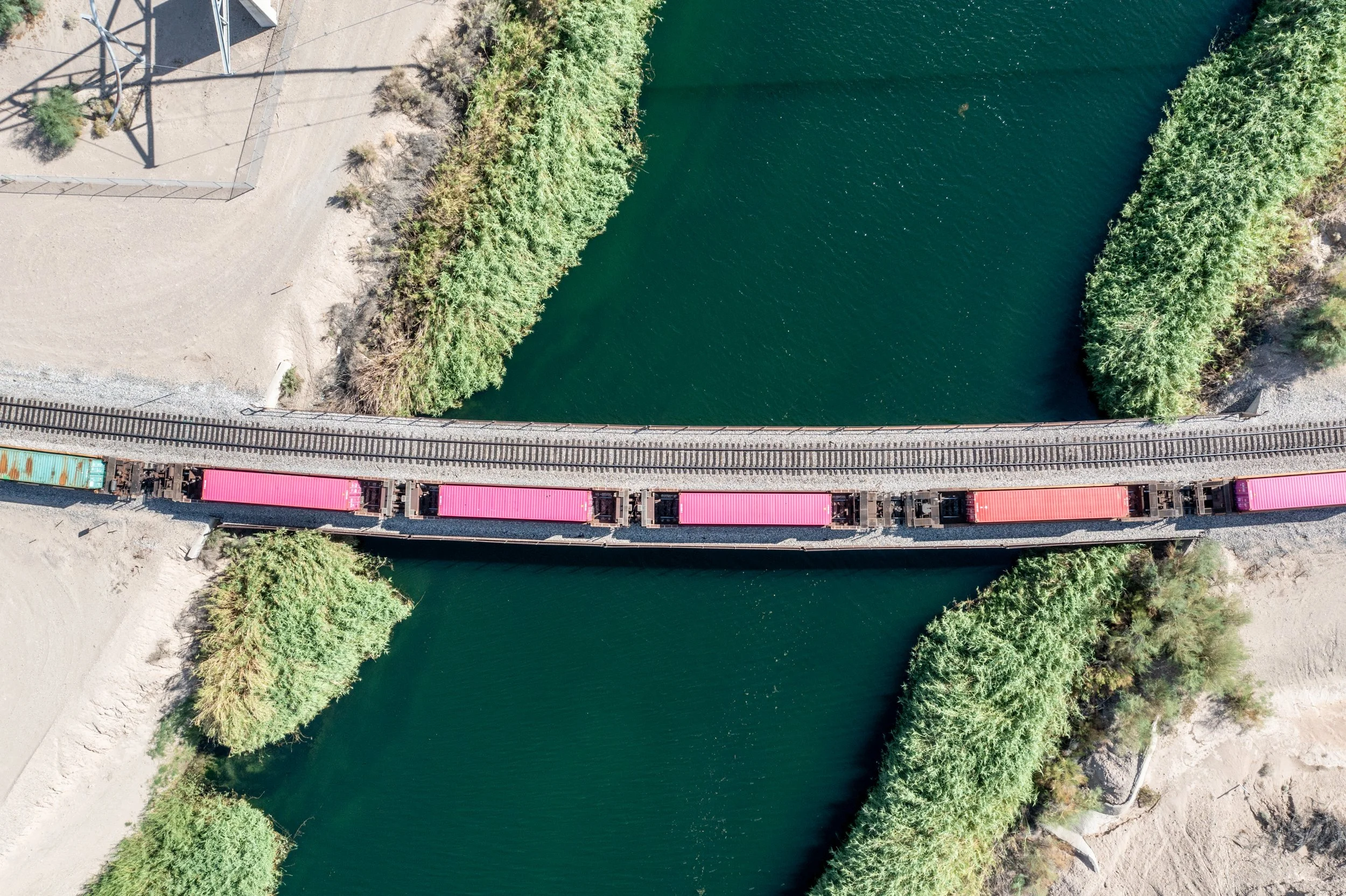
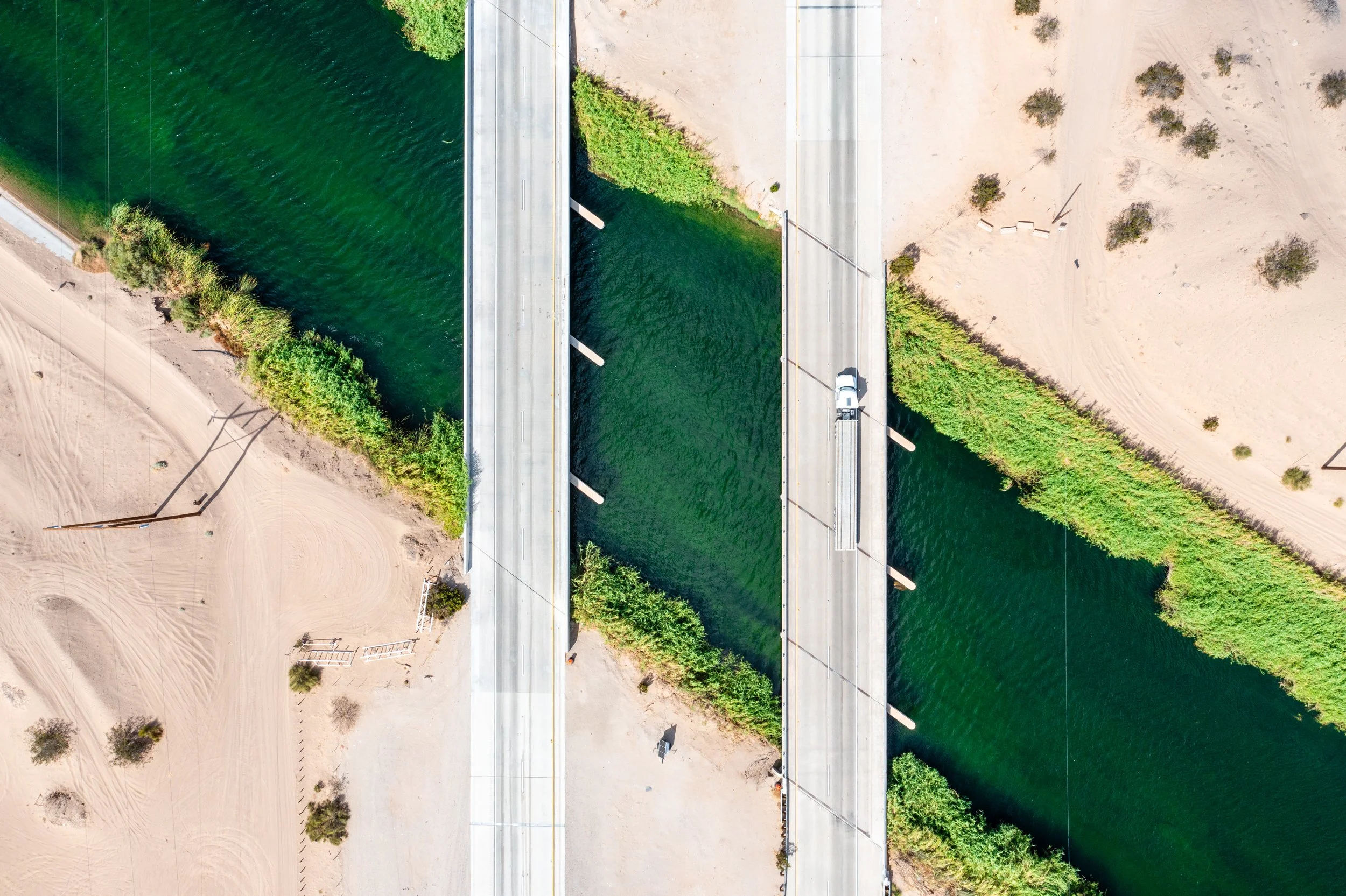
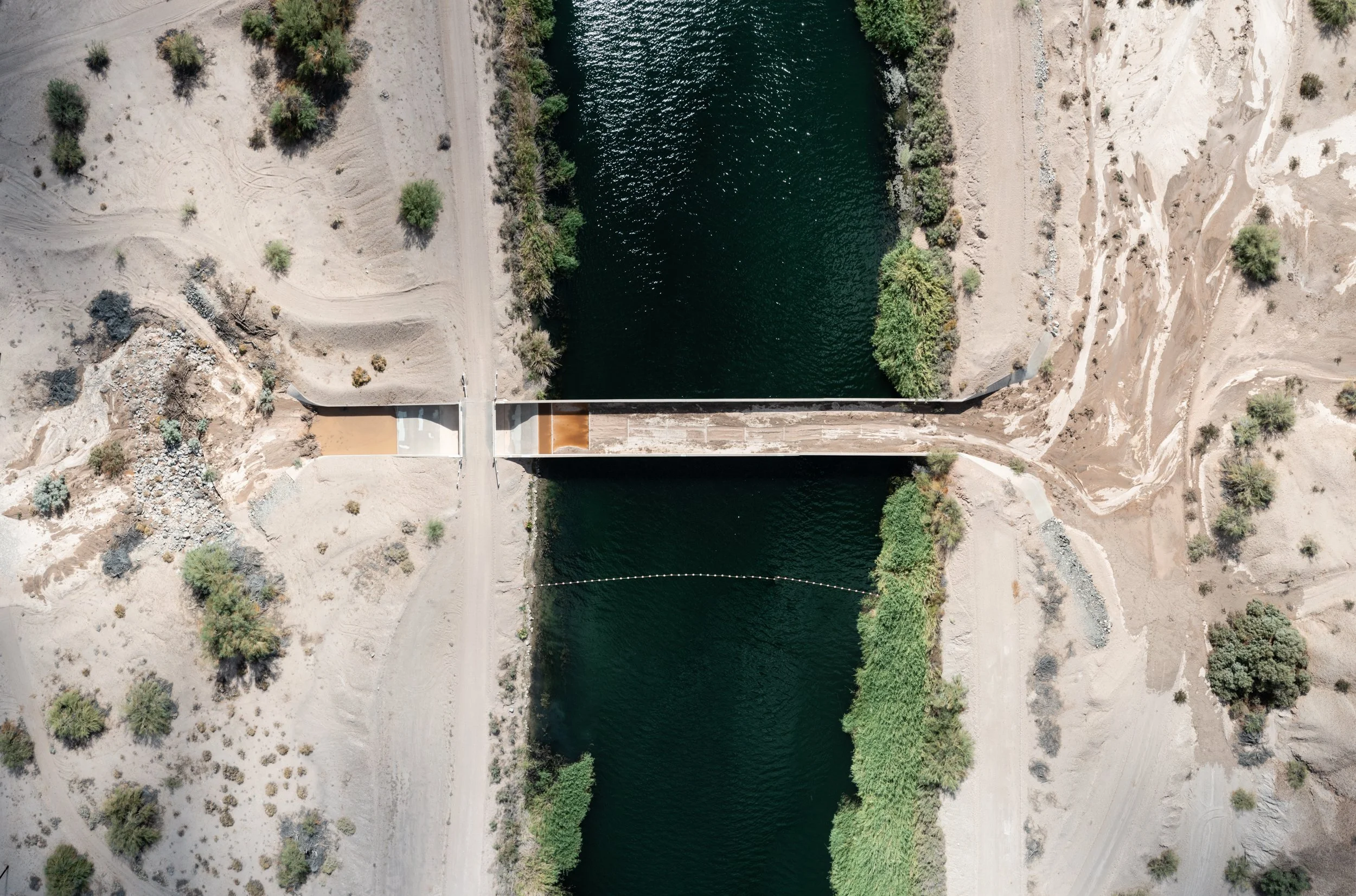
« I set out alone with simple questions. Where does our water come from? How does it get here? And who decides where it goes? »
V. The Edges
At the end of the line, water becomes green fields, fairways and new neighborhoods, right up to the edge of the desert.
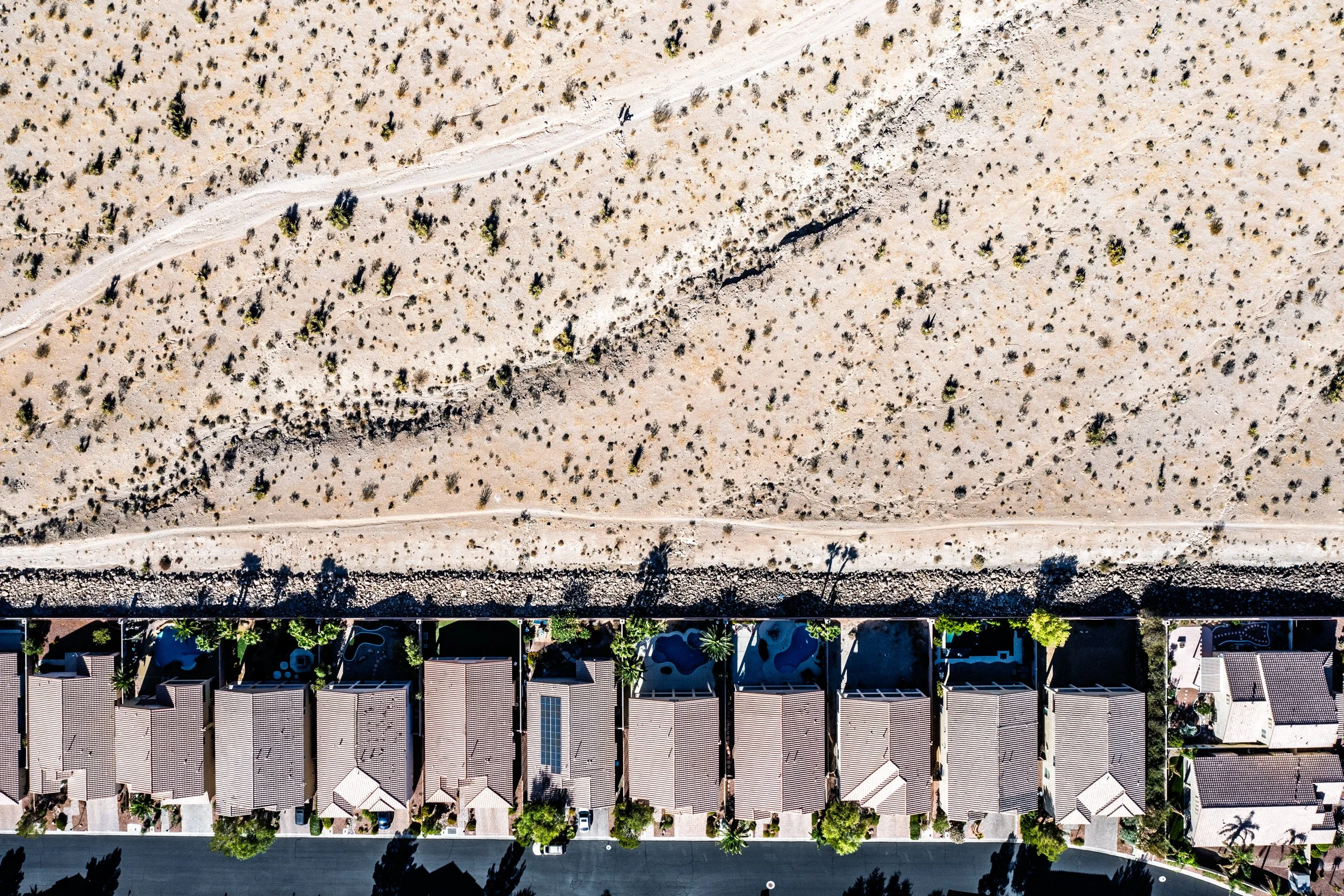
« Don't trust the picture. Under every calm surface is a river that has been asked to give more than it has. »
VI. How I Work
A wanderer, not a tourist.
I don't travel to places because they are beautiful. I go where the water goes, often alone, and I return again and again, in different seasons, to see what has changed.
Beauty as a lure.
Images of damage can make people turn away. Beauty draws them closer. Once they are close, I want them to notice what is fragile, exposed or out of place.
An advocate for nature.
I've been called a documentarian, an activist, an environmental photographer. I think of myself as an advocate for nature, and the camera is how I make the case.
From above.
The drone looks straight down. There is no horizon, no sky, no easy sense of scale. A river becomes a pattern, a canal becomes a line, and the viewer has to work out what they are seeing.
Context, not lectures.
I read the science and I know the numbers. My pictures don't need to show them. Each body of work is one chapter of a longer story, and the context comes from seeing the chapters together.
« I'm not here to lecture. I'm here to make you wonder where your water comes from. »
VII. The Larger Story
Since 2021 I have made a new chapter of work every year. Each speaks a different visual language, but they share one thread: what happens to land and water when we reshape them to serve us.
Sacred Land, Scarred Land (2022–present)
The legacy of uranium mining on the Navajo Nation: abandoned mines, disposal cells, and springs and wells that can no longer be trusted. View the project →
Forgotten Waters (2021 - 2025)
Native communities and the Colorado River: water rights on paper, uranium in the ground, and families who still haul their drinking water. Shown in Water Stories at The Photographer's Eye, Escondido. View the project → · Read the research companion →
State of the Water (2024)
A journey along the Colorado River from the bathtub rings of Lake Powell to the dry delta in Mexico, told through photographs, maps and research. View the project →
Ephemeral Waters (2026)
This series: the river and its canals from above, where beauty and vulnerability meet.
Closer to home, I am also following the Tijuana River sewage crisis on the US–Mexico border.
About the Series
Ephemeral Waters, 2026. Aerial photographs of the Colorado River, the All-American Canal, the Coachella Canal and the Colorado River Aqueduct in California, Arizona and Nevada.
Archival pigment prints on museum-quality fine art paper
24 × 36 in · 30 × 45 in · 40 × 60 in
Limited edition of 5 per size, plus 1 artist's proof, signed and numbered
About the Artist
Stefan Frutiger is a photographer and environmental advocate based in San Diego, California. Born and raised in Switzerland, he spent years making studio portraits and classic landscapes before starting an MA in Photography in 2021 in search of more meaning in his work. He found it in the land and water of the American West. Trained as a computer scientist, he starts every project with research and data, then lets the photographs speak. His work combines medium-format film, darkroom printing, light painting and aerial photography. He chairs water committees for the Sierra Club and volunteers for Medium Photo.
Let's Talk!
I welcome conversations about exhibitions, publications and editorial projects, as well as studio visits in San Diego. Prints are available in limited editions.
Instagram: @stefan.frutiger.photography